
Why Your Next Post Shouldn’t Look Like an Ad

Image credit: Loco Love
For a long time, brands have been taught that looking professional means looking polished. That usually means considered design, consistent colour grading, strong visual systems, art-directed photography and a clear sense of visual cohesion.
There is still value in that. Polished content can create credibility and signal care, quality and professionalism.
But I think we are entering a moment where polish on its own is no longer enough.
Sometimes the content that creates the strongest connection is the content that feels less produced. It might be a candid video, a behind-the-scenes moment or footage that feels a little more spontaneous and less controlled.
That kind of content can feel warmer because it gives people access to another side of your brand. Instead of only seeing the finished surface, they get a glimpse of the people, thinking and activity behind it.
It creates more of an invitation in.
We are becoming more suspicious of polish
Part of this shift, I think, is happening because of AI.
We are now living in a world where a highly polished image may not be real. A person may not be real, and sometimes it is difficult to know how much of what we are looking at has been created or manipulated.
That uncertainty is changing the way people respond to content.
There is something reassuring about seeing personality, imperfection and humanity, particularly when something feels captured rather than manufactured.
That does not mean polished imagery is suddenly untrustworthy, or that you should abandon professionalism altogether. But I do think signs of realness may carry more weight than they once did.
As content becomes increasingly sophisticated, the small things that remind you there are real people behind a brand can become more meaningful.
And that creates an interesting tension.
The tension brands are trying to navigate
I see this tension often with clients.
For founder-led brands, there can be a fear that showing up in a more natural or candid way will make you seem less professional. I know personally that this is something I have worked through too.
If the image is not perfect, the video is not beautifully produced, or you show more of yourself than you normally would, there can be a worry that people will question the quality of your work.
For larger business brands, the concern is often more about consistency and memorability.
If you remove the logo, brand colours, graphic treatment and familiar visual cues, does the content still feel recognisably yours? Or does it start to feel disconnected?
That is a valid concern. You spend a lot of time and money building brand equity, so of course you want to protect it.
But I think this is where our definition of “on-brand” needs to go deeper.
Being on-brand goes beyond visual identity
A brand is not just what it looks like. It is also what people come to understand and feel about it over time.
That understanding is built across different touchpoints. It comes through in the content you create, the way your business behaves, the people involved and the way you participate in your community.
So being on-brand cannot only mean using the right font, colour palette or logo placement.
It has to come back to the heart of the brand and the foundations underneath all of those visible expressions.
Why are you here in the first place? What matters deeply to you? What is important enough that it shapes the way you operate?
In brand strategy, I think of these as the brand foundations.
When those foundations are clear, they give you far more freedom in how you show up because your content does not have to look identical every time in order to feel connected.
There is something deeper holding it together.
When the brand is visible without the branding
A recent example that came to mind was a birthday activation by Loco Love in collaboration with Santos, a local health food store in Mullumbimby in the Northern Rivers.
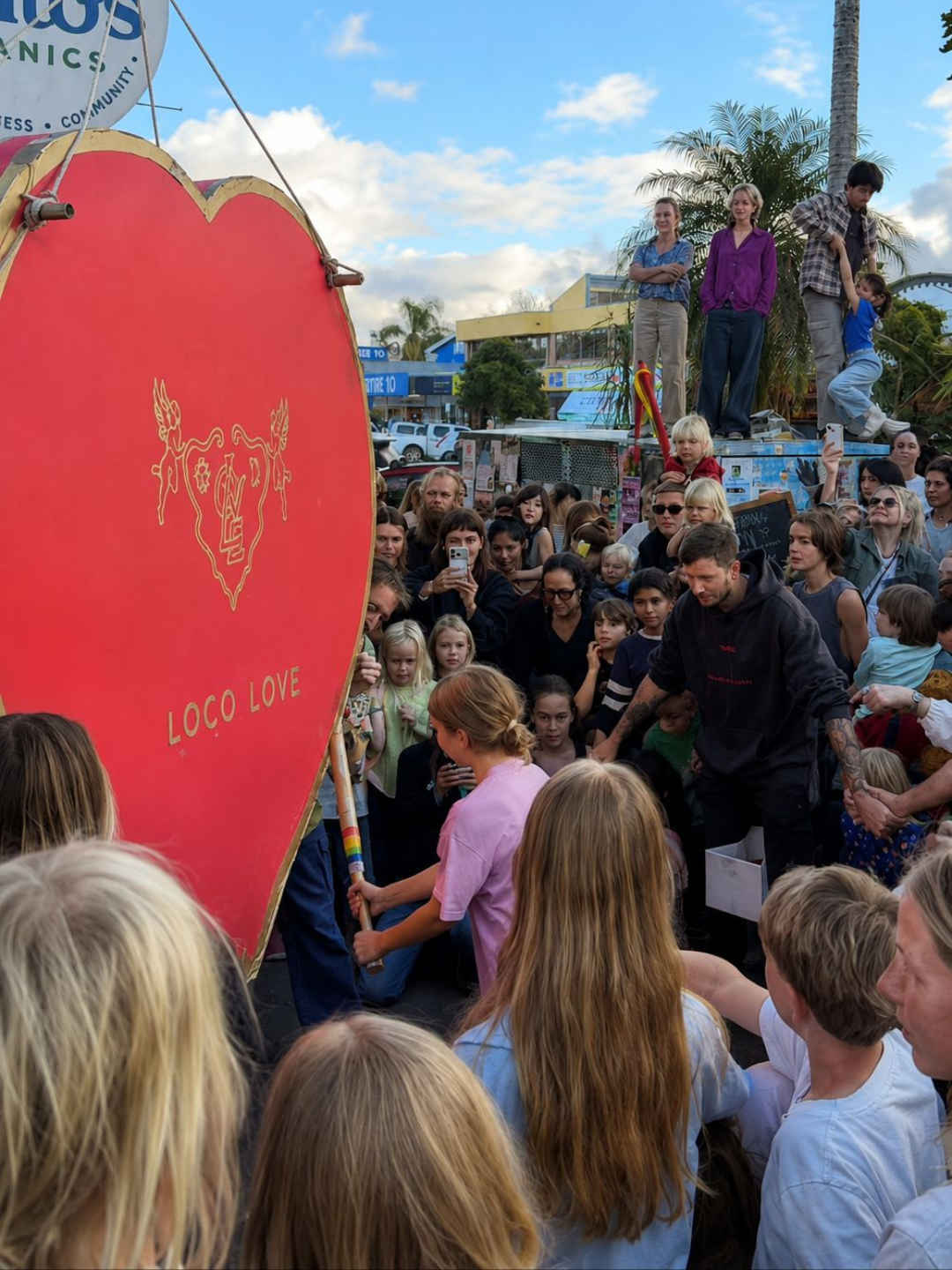
They created a giant piñata in the shape of a box of chocolates and invited the local community to celebrate their birthday and to break it open to reveal free Loco Love chocolates! There was music, community and a genuine sense of occasion around it.
I noticed the videos shared from the event were relatively raw. They did not rely heavily on graphic overlays or overt design treatments to tell you that you were looking at branded content.
And yet, it still felt completely on-brand.
Yes, the giant piñata itself was a branded box of chocolates, but the strength of the content went beyond that.
The event felt community-led and full of personality. The feeling of the activation reflected something about who the brand was, so the identity was coming through in the experience itself rather than only through the design.
That is the distinction I think matters.
A brand can feel cohesive without every individual piece of content being heavily branded. If what you are doing is genuinely aligned with your ethos, and the way you share it reflects the personality of the brand, people can still recognise you without needing every familiar visual cue.
Strong foundations create more freedom
The clearer you are on the heart of your brand, the less you have to rely on surface-level signals to hold everything together.
Strong foundations can guide your visual identity and your content, but they can also shape the partnerships you pursue, the things you choose to participate in and the way you build relationships with your community.
That kind of clarity gives you more room to move.
You can show different sides of the brand and let some pieces feel polished while others are more spontaneous, without everything becoming disconnected.
When those foundations are missing, however, content can start to feel disjointed. That is often when brands rely more heavily on traditional cues such as logos, colours, graphics and templates to create a sense of consistency.
There is nothing wrong with those things. They are useful tools, but they cannot carry the whole brand on their own.
The goal is not to become deliberately messy
None of this means I think every brand should abandon production values and start posting everything exactly as it comes off the camera.
There is still a place for beautiful, thoughtful and professional content. Not every piece needs to be behind the scenes or made on the fly.
For me, it is more about allowing room for both.
You can have the carefully considered campaign and still share the spontaneous moment that reveals something more human. You can create polished work without feeling as though every single thing needs to look finished to the same degree.
For founder-led brands in particular, I think there is an opportunity to be less afraid of showing the parts of the business that feel more natural.
Often, those are the moments people connect with because they get to see more of how you think and work, rather than only seeing a perfectly finished surface.
As AI makes it increasingly difficult to know where the boundaries between real and fabricated content sit, I think those human signals will become even more important.
Being on-brand is not about making every piece of content look the same.
It is about knowing your brand deeply enough that you can show more of it without losing what makes it recognisable.